Harlene Rosen: The Complete Biography of Woody Allen’s First Wife
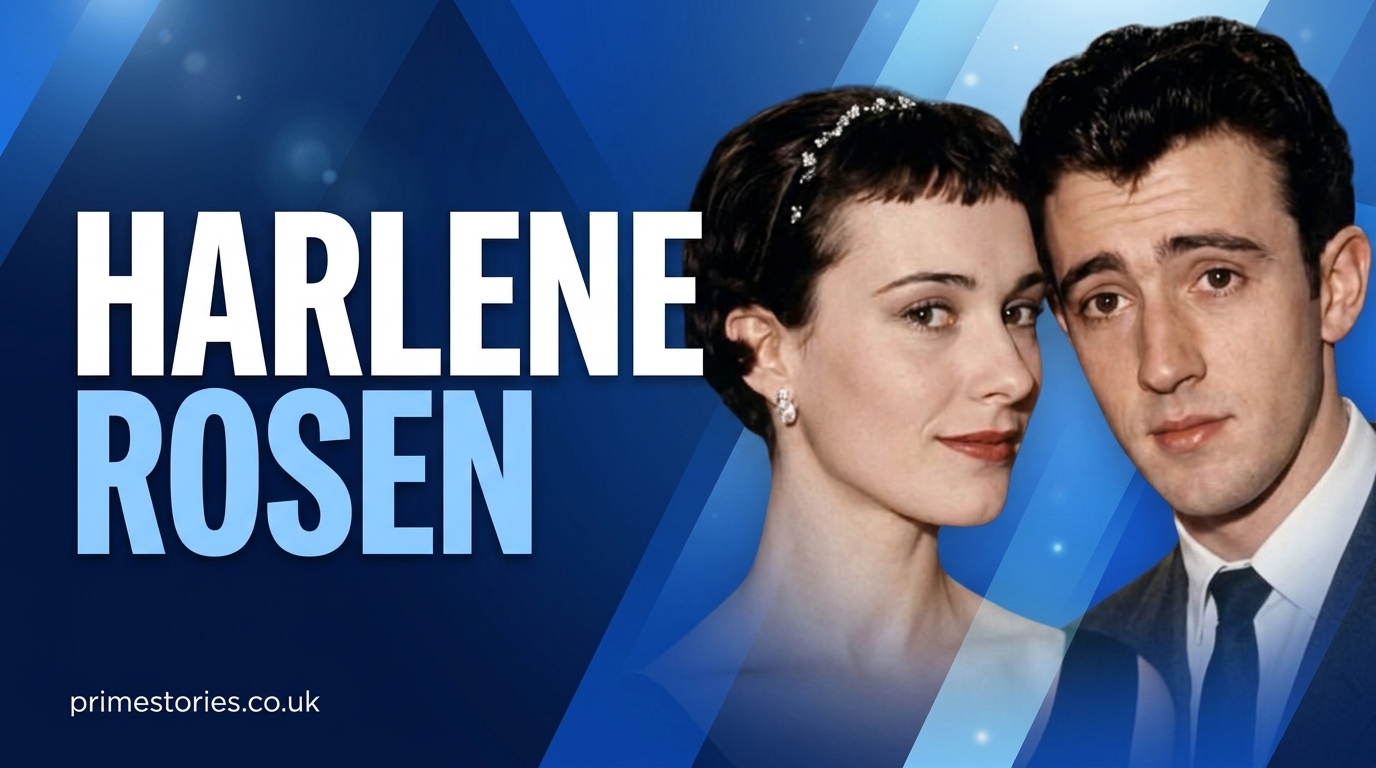
Harlene Rosen is a figure deeply embedded in the foundational history of modern American comedy, though she spent the vast majority of her adult life intentionally far removed from the spotlight. Best known to the public as the first wife of the legendary and highly controversial filmmaker, writer, and comedian Woody Allen, Rosen’s story is too often reduced to a mere footnote in the sprawling saga of her ex-husband’s career. For decades, her name was primarily recognized as the punchline to some of Allen’s earliest and most famous stand-up comedy routines. Yet, the true, verified story of Harlene Rosen is far more complex than the caricatures painted on mid-century comedy stages. It is the story of a remarkably young bride navigating an intensely turbulent marriage, a woman who possessed the fortitude to legally fight back against public humiliation, and ultimately, a person who chose the profound peace of a private life over the chaotic glare of Hollywood.
To understand Harlene Rosen is to look well beyond the “Dread Mrs. Allen” persona created by her ex-husband. Her biography offers a fascinating glimpse into the mid-1950s New York creative scene, the harsh realities of early marriage, and the legal boundaries of comedy and defamation. Despite enduring significant public mockery, Rosen’s later life has been defined by a quiet, steadfast dignity, culminating in a surprising and deeply graceful public statement of reconciliation half a century after her bitter divorce.
Quick Facts: Harlene Rosen
| Attribute | Details |
| Full Name | Harlene Susan Rosen |
| Birth Year | 1940 |
| Known For | First wife of filmmaker/comedian Woody Allen |
| Marriage Duration | 1956 – 1962 (Separated 1959) |
| Age at Marriage | 16 |
| Education | Completed four years of college |
| Public Status | Strictly Private |
Early Life and the Cultural Landscape of the 1950s
Harlene Susan Rosen was born in 1940 in the United States, primarily raised in the vibrant, post-war environment of New York. She was born to parents Julius and Judith Rosen, who provided her with a traditional upbringing reflective of the era’s values. Growing up in the 1940s and 1950s, young women were frequently subjected to intense societal expectations regarding marriage and domesticity, which were often prioritized over personal career ambitions or higher education. However, Rosen possessed a deep intellectual curiosity and a strong artistic inclination from a very young age.
Her early years were heavily defined by her profound passion for music. Rosen was a highly talented pianist, dedicating countless hours to mastering the instrument. This musical ability was not merely a casual hobby; it served as a defining characteristic of her youth and would ultimately become the catalyst for the most consequential relationship of her life. In addition to her musical talents, Rosen was a voracious reader with a particular interest in literature and academic disciplines, traits that set her apart from many of her peers during a highly conformist decade. She was a bright, culturally engaged teenager, navigating the complex social dynamics of New York City, entirely unaware that her musical pursuits would soon place her at the center of a rapidly evolving American comedy landscape.
The Intersection of Jazz and Romance
The mid-1950s in New York City was a period of extraordinary creative ferment, particularly within the realms of jazz and early television comedy. It was within this dynamic environment that a teenage Harlene Rosen crossed paths with Allan Stewart Konigsberg, a young, ambitious, and relentlessly driven comedy writer who would later become universally known as Woody Allen.
Their introduction was entirely predicated on their shared love of music. Allen, who was a passionate aficionado of New Orleans-style jazz, played the clarinet and was actively involved in assembling and performing with local jazz bands. Recognizing her exceptional skill at the piano, Rosen was brought into Allen’s musical orbit, playing the piano alongside his jazz ensemble. The shared experience of rehearsing, performing, and discussing music formed a strong initial bond between the two teenagers.
Despite the fact that Allen was still struggling to establish his name—working primarily as a joke writer for prominent newspaper columnists and early television personalities—he possessed an intense, singular focus on his career. Rosen, conversely, was still high-school-aged, balancing her education with her musical interests. Their courtship was brief and deeply intertwined with their creative pursuits. According to later biographical accounts, Rosen was not merely a passive muse; she actively influenced Allen’s intellectual development. She was deeply interested in philosophy and introduced the young comedy writer to various philosophical texts and disciplines, sharing her reading material and expanding his intellectual horizons—themes that would later become absolutely central to his iconic filmmaking style.
A Teenage Marriage and the Reality of Adulthood
The romantic relationship between Harlene Rosen and Woody Allen progressed with astonishing speed. In 1955, Allen officially proposed to Rosen. The following year, on March 15, 1956, the couple was married in a private ceremony at the Hollywood Hawaiian Hotel in Los Angeles, California. The ages of the bride and groom remain one of the most striking aspects of their union: Rosen was a mere 16 years old, and Allen was 20.
Entering into a legal marriage while still a minor was a monumental life shift for Rosen. The romantic idealism of a teenage wedding quickly collided with the harsh, practical realities of adulthood and domestic responsibility. Following their marriage, the couple settled into the relentless pace of New York City. Allen was intensely focused on climbing the highly competitive ladder of the television comedy industry, eventually securing highly coveted roles working as a writer for heavyweights like Sid Caesar and Ed Sullivan. His career demanded grueling hours, obsessive focus, and a lifestyle that left little room for nurturing a fragile, incredibly young marriage.
The marriage was, by virtually all historical accounts and subsequent admissions, highly tumultuous from the very beginning. In David Evanier’s 2015 book, Woody: The Biography, friends of the couple noted that there was essentially no traditional “honeymoon period.” The couple was simply too young, too inexperienced in the mechanics of long-term partnership, and too overwhelmed by their respective transitions into adulthood to foster a stable environment.
Allen himself later addressed the underlying motivations for the marriage with a stark lack of romanticism. In a 2015 interview with NPR, he candidly admitted that the marriage was not built entirely on a foundation of profound love. Instead, he acknowledged that marrying Rosen provided him with a legitimate avenue to leave his parents’ home, establish his independence in New York City, and face reality on his own terms. For Rosen, navigating her late teens as the wife of an obsessively driven, often neurotic comedy writer proved to be an immensely isolating and difficult experience.
The Breakdown of the Relationship and the Pursuit of Education
Despite the inherent instability of their union, Harlene Rosen refused to allow her teenage marriage to derail her own intellectual ambitions. While supporting her husband’s burgeoning career, she demonstrated remarkable determination by enrolling in and successfully completing four years of college. This achievement was particularly significant for a woman of her generation who had married at the age of 16. It showcased a fierce internal drive and a refusal to be entirely consumed by her husband’s towering ambitions.
However, the educational achievements and intellectual bonds they shared were not enough to sustain the marriage. The relationship was marked by frequent arguments and a fundamental clash of attitudes. Allen would later publicly admit to his own culpability in the failure of the marriage, stating that during their first year together, he possessed a “bad basic attitude” toward his wife, unfairly placing her beneath a pedestal and fostering an environment of constant friction.
By 1959, the emotional distance and interpersonal conflict had become insurmountable, and the couple officially separated. The process of legally untangling their lives was prolonged, and their divorce was not finalized until 1962. The marriage had lasted approximately six years on paper, though the functional partnership had dissolved much earlier. As part of the divorce settlement, Allen was ordered by the court to pay Rosen a modest alimony of $75 per week, a figure that was stipulated to increase to $175 per week should he secure steady, high-paying employment before she remarried. With the legal proceedings concluded, Rosen likely anticipated a quiet return to a normal, private life. Unfortunately, her husband’s career trajectory would soon make that impossible.
The “Dread Mrs. Allen” and the Trauma of Public Mockery
The early 1960s marked a pivotal transition for Woody Allen. Encouraged by his managers, he stepped out from behind the typewriter and began performing his own material in the smoky, intellectual comedy clubs of Greenwich Village. He cultivated a highly specific, revolutionary stage persona: the hyper-articulate, deeply neurotic, intellectually insecure, and perpetually victimized New Yorker. To fuel this persona, Allen mined his personal life for material, and his recently finalized divorce from Harlene Rosen became his primary comedic ammunition.
On stage, in prominent nightclubs, and eventually on national television, Allen mercilessly mocked his ex-wife. He stripped away her actual identity and reconstructed her as a grotesque caricature he famously dubbed “the Dread Mrs. Allen.” He routinely referred to her in his act as “Quasimodo,” turning her physical appearance and their failed marriage into a nightly punchline for roaring crowds.
The public humiliation reached a terrifying peak during Allen’s appearance on The Steve Allen Show in November 1963, and through various widely distributed comedy albums. During one infamous routine, Allen delivered a joke that crossed the line from standard self-deprecating relationship humor into deeply offensive territory, making a highly inappropriate joke regarding an alleged sexual assault involving his ex-wife. For Rosen, who was attempting to build a quiet, respectable life as a college-educated woman, having her name, her marriage, and her dignity shredded on national television by a rapidly rising celebrity was an agonizing ordeal. The comedy landscape of the 1960s was largely unregulated regarding the ethical treatment of real-life subjects, leaving private citizens with very little recourse when targeted by powerful entertainers.
Drawing a Line: The Defamation Lawsuit
Harlene Rosen, however, refused to be a passive victim of her ex-husband’s skyrocketing fame. Recognizing the profound damage being done to her reputation and personal peace, she took decisive, unprecedented legal action. In the late 1960s, Rosen filed a high-profile defamation lawsuit against Woody Allen and the broadcasting networks that aired his material.
The lawsuit was a landmark moment, highlighting the tension between a comedian’s right to artistic expression and a private citizen’s right to protect their character from malicious public slander. Rosen’s legal team argued that Allen’s continuous, cruel characterizations—particularly the false, highly damaging jokes that went far beyond mere relationship grievances—constituted a direct attack on her personal and professional reputation.
The legal battle was intense, forcing Allen to confront the real-world consequences of his stage persona. During the early proceedings, Rosen was successfully granted a temporary cease and desist order, legally forcing Allen to halt his public mockery. The lawsuit dragged on for several years before ultimately being settled out of court in the early 1970s. While the specific financial terms of the settlement were never publicly disclosed, the lawsuit achieved its primary objective: Woody Allen permanently dropped the “Dread Mrs. Allen” routines from his repertoire. Rosen had successfully defended her dignity, forcing one of the most powerful voices in American comedy to stand down.
Decades of Silence and the Power of Privacy
Following the resolution of the defamation lawsuit in the early 1970s, Harlene Rosen executed one of the most complete and effective withdrawals from public life in modern Hollywood history. Having secured her peace through the legal system, she severed all ties with the entertainment industry and the media machine that had sought to exploit her pain.
For nearly five decades, Rosen maintained an absolute, unbroken silence. She never granted interviews, she never wrote a tell-all memoir, and she never appeared on television to offer her perspective on her ex-husband. She chose to live a deeply private, anonymous life, allowing her education and her personal interests to guide her path rather than her proximity to celebrity.
Her commitment to privacy stood in incredibly stark contrast to the trajectory of Woody Allen’s life. As Allen evolved into a revered, Oscar-winning filmmaker, his personal life became increasingly chaotic and scandal-ridden—most notably his highly publicized and deeply controversial relationship with Soon-Yi Previn, the adopted daughter of his long-time partner Mia Farrow. While the global media obsessively analyzed every aspect of Allen’s subsequent marriages and personal controversies, his first wife remained entirely unreachable, observing the chaos from a dignified, impenetrable distance. There is a profound strength in her silence; by refusing to engage with the media, Rosen ensured that she would no longer be defined by the man who had once tried to turn her into a punchline.
The 2015 Reconciliation: A Final Message of Grace
After maintaining her strict policy of silence for over 50 years, Harlene Rosen surprised the literary and entertainment worlds in 2015. Biographer David Evanier was in the process of compiling Woody: The Biography, a comprehensive look at the filmmaker’s life ahead of his 80th birthday. Recognizing the historical milestone, Rosen chose this specific moment to officially close the book on their shared history.
She provided Evanier with a heartfelt, meticulously crafted public statement directed entirely at her ex-husband. The statement was a masterclass in maturity, acknowledging both the beauty of their youth and the painful realities of their marriage without a trace of lingering bitterness.
Rosen wrote: “Wondrous Woody, you inspired me with your enormous energy, creativity and charisma… After our teenage summer of love, marriage was difficult… You established a career. I completed four years of college. We supported each other, learnt about life and became adults. There was sadness, tears, laughter and love.”
This statement fundamentally reshaped the historical narrative surrounding their relationship. It proved that Rosen had not spent the ensuing decades harboring resentment. Instead, she had processed the trauma of their highly public divorce, recognized the mutual immaturity that doomed their teenage marriage, and ultimately found a place of profound peace and forgiveness. It was a remarkably graceful conclusion to a relationship that had once been defined by courtroom battles and public mockery.
Current Status and Lasting Legacy
Today, Harlene Rosen is in her mid-eighties and continues to reside in the United States, maintaining the strict privacy she has guarded for over half a century. There are no public records indicating that she ever remarried or had children, and she remains entirely unbothered by the contemporary media landscape.
Harlene Rosen’s legacy is far greater than her brief tenure as the wife of a famous comedian. She is a testament to the absolute resilience of the human spirit. She survived a highly turbulent teenage marriage, stood up against powerful media networks to defend her name through a landmark defamation lawsuit, and ultimately possessed the immense emotional intelligence to forgive the man who had wronged her. In an era where proximity to fame is often viewed as the ultimate currency, Harlene Rosen’s lifelong commitment to privacy, education, and personal dignity remains her most defining and admirable achievement.
Looking for more definitive biographies of the women who shaped Hollywood history? Explore our full celebrity archive on the PrimeStories homepage.